
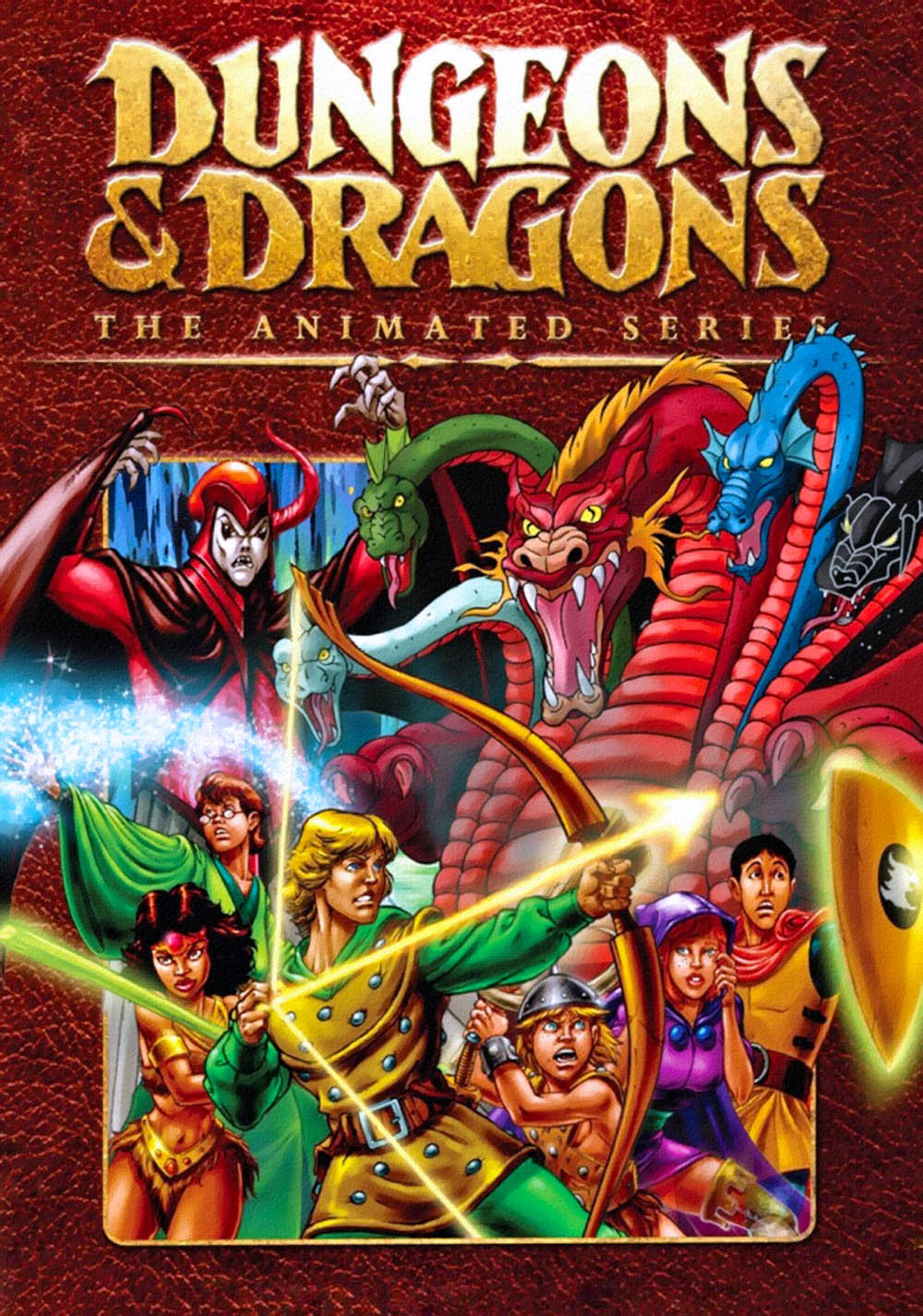
“You are not entering this world in the usual manner, for you are setting forth to be a Dungeon Master. Certainly there are stout fighters, mighty magic-users, wily thieves, and courageous clerics who will make their mark in the magical lands of D&D adventure. You however, are above even the greatest of these, for as DM you are to become the Shaper of the Cosmos. It is you who will give form and content to the all the universe. You will breathe life into the stillness, giving meaning and purpose to all the actions which are to follow.”
― Gary Gygax, from GoodReads (not sure which book, tbh)
This week my Writing for Games students played Dungeons & Dragons for an entire 2 hour and 40 minute class period. This came on the heels of making D&D character and is part of the build to a collaborative project that asks them to build a D&D Module. Sometimes students balk at this; they came to a writing for games class to learn to write for games. They were thinking of Halo and Zelda and The Last of Us and Skyrim. They weren’t expecting dice and saving throws.
Sometimes students think it’s just because I love Dungeons & Dragons. Make no mistake, I do. But my time as a major D&D player were over a decade ago, and up until I bought the 5e books for my classes, I was mostly versed in AD&D 2nd Edition. I still DM weird because there were different rules there and those are instinctive.
But no, it’s not about my love for the game. It’s not meant to turn the class into a D&d class (though I would LOVE to teach that class one day if we had the students who could fill it). There’s a much more pragmatic set of reasons.
- As the Gygax quote above indicates, D&D is about storytelling things to life. If you’re a DM, you’re building and populating a world. If you’re playing, you’re developing a character. With the exception of some puzzle games and games using real-world or licensed characters from other media will need strong character development to work well, particularly in the modern marketplace. One of the time honored creative writing methods for developing a character is to try to speak as that character, to talk to people and answer questions. I mean they do it at the Iowa Workshop, so you know it’s good. *wink* Playing a D&D character is a hyper version of that. It teaches a person to build a character, because if you do it wrong, you end up trying to play yourself with a set of stats on a sheet of paper.
- I chose D&D because the base rules are free, it’s popular, and there are numerous student organizations playing it. But in reality, it’s just a game engine in this case. If you write games, unless you’re an indie developer who is going to do all the work herself, you will be writing for an engine. Someone else is creating the literal mechanics of the world you’re working in.
- Game writers need ethos. If you’re going to write games and you don’t know D&D you can get into some really awkward conversations in interviews and at industry events like GDC. It’s not that D&D is required to be a game writer. But D&D is like being a 90s music fan and not owning Nevermind. You should KNOW that stuff. You should head-bang hearing the intro to Smells Like Teen Spirit. You should know what a saving throw is.
- Most importantly, the single best piece of game writing for a potential game writers to have in their portfolio is a polished RPG module. The reason for this is easy to see but students often overlook it. You don’t want to create a new engine for your portfolio. Not as a writer. That’s what designers do for they design portfolios. And you can’t really show your narrative chops with a GDD (and what really IS a GDD? We don’t have a standard for how those should look). But creating in a familiar genre for a familiar game engine allows a writer to show off their ability to do all the things a good game writer should be able to do: character creation, narrative, quest/puzzle design, etc.
So yes, my students play. I make them play hard. I’ve also made a career of playing hard myself. But the reason is far more pragmatic. I’m giving them, in a single class, the template to build the profile they need to go looking for work.
And we kill a dragon or two.