
One of the questions that students ask after the activity I explained yesterday is why I’d ask them to do that, why I’d make them go through such an activity.
If you understand how the games industry works, you probably know the answer. But it’s only as transparent as it seems to those in the know because of how critical we are of games. In reality, it’s not that easy to understand at all.
But to say all of it another way, I want to start from a premise. That premise is Connect 4.
For (four) anyone who doesn’t know what it is, Connect 4 was a game that used a big weird slotted board that stood on end and sets of discs of two different colors (they look like checkers). The goal is to drop your discs so that eventually you connect 4 of the same color and win. Pretty sneaky, Sis!
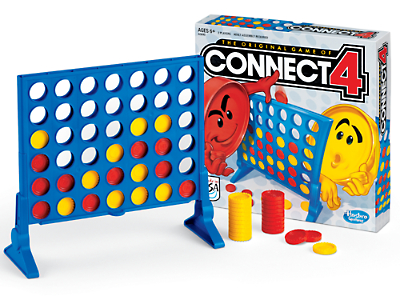
If you’re observant, you realize that this is just a slightly more refined version of Tic Tac Toe.
It introduces a slight bit of balance by making the board bigger and adding the fourth required match. But at its core, it’s a game where you match items of a color (or x and o).
This gave birth to a whole genre of puzzle games once digital gaming exploded. They’re called Match 3s, and the core mechanic is always the same: you can move colored items around to match three of them to eliminate those three and score points. Most include bonuses for getting four, and better bonuses still for getting five. That qualifies in some small ways as a mechanics change, but the underlying mechanic is matching those three similar items to remove them from the board and score points.
But the narratives… they make these games.
Anyone know Candy Crush Saga? It’s now a TV gameshow, too (what?). There’s also Dr. Mario, there’s Bejeweled, there’s WWE Champions which I’ve mentioned here before. There are whole hosts of others if you just look at Steam or a phone app store. There was Puzzle Quest. There’s just a ton of these games. Bubble Bobble is a similar game. There’s a new Angry Birds entry that is a match three. They are literally EVERYWHERE.
The underlying mechanics are just moving things to match colors, but what that becomes as a written narrative is the difference between Candy Crush Saga and Phill’s Match Those Three Blue Circles.
It’s also the difference between a game people cannot put down and a game no one would ever pick up.