
Tonight my Writing For Games students spent 2.5 hours playing Dungeons & Dragons (if you’re curious why, pedagogically, that’s my planned weekend posts).
I’m exhausted tonight after teaching all day then driving home in the snow, so what I am going to offer here is a story that illustrates one of the things I think Dungeons & Dragons can teach us about life and politics. So here’s a story.
I used to play A BUNCH of D&D. One of the things that my best friend at the time Rod any myself prided ourselves on was staying out of the meta game and simply role-playing accurately. That meant knowing what we knew as characters and acting as the characters would, even if we as people/players knew it was a bad idea.
In a campaign that Rod ran (a long one of his own invention), he chose to break from making us all play alignments that worked together. If you have ever DMed, you know that one evil character with a group of good characters is a bad idea. So there we were:a noble priest, a paladin, a monk, a wizard who happened to be lawful good and my character: a chaotic evil rogue/thief.
This was a long campaign–over four or five months of playing once a week. We did a great deal of leveling together (we were around level 20, which isn’t as impressive in 2e as it is in 5e, but we were no slouches). The group worked on a quirky premise: my thief character was a conman and liked money, so he cooperated with the lawful good brigade because it was nice cover to procure stuff and honestly, no one suspected there was one sneaky jerk with this troop of religious faithful. And the party trusted my character, even though they had to realize I was evil based on some of the coincidences that played out. In retrospect I don’t know why they didn’t detect evil or something on me.
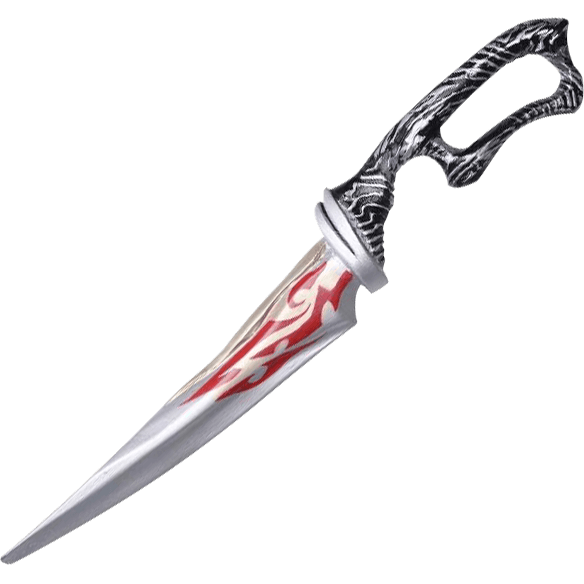
At at any rate, it all went sideways when we were sent to recover a rich noble’s family artifact. The long quest was meant to net money for the religious folks to build a new church. But when we found it, the artifact was a magic dagger.
my character wanted it. It was the first time the character wanted something that he couldn’t simply take without the party realizing (at least in character) that he’d taken.
So I offered to buy it. We had made plenty of gold–and I’d stolen more treasure on the side. I could outbid the quest giver guy. And I did, because while the character loved a con, I didn’t think I could beat 3 other players (the mage wasn’t around that day).
they of course refused, as they felt the need to fulfill their quest. And so I hatched a plan. I started hanging back as we traveled toward the city, staying close but always behind everyone. After a while, they stopped paying attention to me being in back. It was just how we were traveling.
As we entered town, and the quest giver’s neighborhood, the party had to climb a large staircase–around 40 steps. The priest had the dagger. Mistake #1.
I attacked him from behind, with opportunity because he didn’t expect it. I rolled a 20. He died. I took the dagger. They let me have the time to ready it as they debated my choice. Mistake #2.
It was an amazing dagger. So much so that I was able to best the other two players in combat and leave their corpses on the steps. It’s kind of a feat to kill a Paladin with a rogue when you’ve lost the advantage of being stealth, but… it was a pretty sweet dagger.
If you’re reading here, you know me well enough to know I’m not the kind of person who does harm for personal gain. But this wasn’t me. This was that character’s story.
It did upset my friends a bit, but I think they understood. The DM probably shouldn’t have allowed me to win, but that was the “right” move for my character. I was being D’Nin in that moment, the “black heart” himself.
This offers us three lessons:
1) know the motivations of your characters or be ready for things like this or like the end of The Last of Us. Characters that resonate are authentic to their narrative call. Not everyone seeks redemption.
2) role play–like real life–isn’t fair. Sometimes you’re trying to do what is right and someone else will do something opportunistic.
and 3) …
Sometimes the evil guy you thought couldn’t possibly screw you over takes a dagger to your back. And you roll a constitution check.
well met, friend.