
“Ambassador Daniel Fried, the outgoing coordinator for sanctions policy, did not mention President Donald Trump or speak directly to his policies, but the State Department officials present understood his meaning when he said ‘we are not an ethno-state, with identity rooted in shared blood.’
‘The option of a white man’s republic ended at Appomattox,’ he said in a farewell address at the State Department, referencing the 1865 battle that led to the surrender of the Confederate army and ended the Civil war.“
-CNN, link here.
Since Civil War history is something we tend to cover in American schools, I think most people can get what Ambassador Fried is driving at. I’m not sure that our President does, which alarms me. But it’s not new. It’s never been a new thing. Even during the Civil War itself the issue of freedom wasn’t really about freedom. But you have to study history to know that. I don’t want to try to convince you if you haven’t done the reading. I’ll leave that to historians.
Instead today I want to offer some personal history. Sometime last week, as I was talking about my job and the circumstances of my recent position changes, my mother asked me a pointed but fully apt question. I was talking about the fact that I sometimes feel like I am carrying an uneasy weight because of my academic appointment. For those who don’t know, I am a Heanon Wilkins Fellow, which is a pre-tenure position that is intended to convert to tenure line, a position that is reserved or scholars from underrepresented groups. Dr. Wilkins was the first African American professor at Miami, and I am profoundly proud to have been chosen as someone who is linked to his legacy. I’m also one of only three Native American scholars employed by Miami University (there were only two in the last set of numbers, but I know that they hired another mixed-blood this year).
Dr. Wilkins passed on last year. As such, I was one of, if not the very last, scholar to his named program. I feel a certain pride in that. And I was a part of his memorial service. I won’t claim that I knew him well as a person; in fact we never had the chance to sit down and talk because he was in such poor health during my time here.
But he knew of me, and we exchanged messages. I feel like I owe it to him to make good on the opportunities afforded to me in his name. I also feel like I owe it to the other Cherokee scholars (the few in game studies, the small but mighty contingent in rhetoric, the microscopic proportion of Miami faculty) to fend for myself and to make good on the opportunities I have.
I’m also going to brag for just a second. I’m fucking good at my job. I can take on administrative roles with ease and get stuff done (I salvaged a job search that had failed once and been in limbo, managing to convince our candidate of choice to take the job, for example. And I’ve grown every initiative I’ve touched). I’m a good teacher (my evals and awards say great, but I’m going to just say good). I’m the colleague that will do whatever you need of me when you’re in a bad situation. I’m also a fairly talented writer (yeah, blog doesn’t show it, right?) and while there are numerous people who don’t get my work because they want to see a certain type of research, I do important research in careful and ethical ways. I mentor with caution and care. Other than the fact that I’m cheesy and a touch awkward at times, I’m exactly what you want to see in a college professor: I think before I speak, I put my students first, I have specialized knowledge but don’t lean on it like it’s some sort of monolith. I encourage creative and critical thought, and I can offer a view that very few people have.
So back to my mother’s question, which I abandoned there for a second (that’s the storyteller style, sorry). She asked me why I was so angry in my 20s about how the Cherokee have been treated and are being treated, why I’d become so radical about native issues, when I had been aware of my lineage my entire life.
The answer was hard to give to her, because so much of life as we age becomes the benefit of seeing our lives with 20/20 hindsight. I have, since I was as young as I can remember, not understood racism and fought against it. My first best friend– our neighbor during the super-brief period I lived with my mother and father before their separation– was black. The first friend I invited to my grandparent’s house– who my grandfather kicked out of the house and called the n-word– was black. I always felt more comfortable around black kids, even when we moved and I ended up in an all-white school.
And I was aware of my “grandfather” mocking me (and my mom). I wasn’t computing all of it real-time, but he used to see me playing with the adopted Native American neighbor (he was the Navajo son of a white couple that taught at Earlham College) and point to my mom, then to us, and say “one little, two little, three little Indians.”
Here’s the truth bomb. I knew my dad was Cherokee, on some level. I really did. But I also knew he was a cop and that he was a piss-poor father. I wasn’t interested in knowing his family after a point because he hurt me so many times in so many profound ways when I was young. And I didn’t know that my mom wasn’t Polish and German like her “parents” because it didn’t dawn on me that she was adopted until I was later in my life (and they still deny it, but it is in fact true). The people my mom didn’t always hear as I was growing up referred to her teaching me Native traditions as “crazy.” And I was labeled “weird.”
So honestly, until I was about 17 years old, I knew I fit in better with the black kids who I knew and that people looked down on me, but I thought it was because I was “weird” or “crazy.” I did the things that a Cherokee does culturally (in fact I do so more than other Cherokee I know who make a big deal of their doing Native things), but I didn’t crystalize in my mind that I was doing that because it was my cultural upbringing.
There was an incident when I was 17.
my small white high school’s football team started wearing confederate flag bandanas. All of them. At the same time, I was serving as a peer helper (in retrospect a bad idea for the high school, but we basically offered student-to-student therapy). One of my “clients” was a guy who had bullied me since fourth grade, who brought a copy of Mein Kampf and asked me to help him with his reading comprehension. While talking to him, I discovered that the football team considered their bandanas a “sign to those [n-words] not to mess with us.”
The week of our homecoming game, we had a series of social events. A female student invited her boyfriend. He was black. Several members of the football team took to chasing him in a pick-up truck. I think they would have seriously hurt him, had I not ran to him, rushed him to my car, and drove him home. When I returned to the campus, the same students chased me home. One of them shot at me with a hunting rifle. I don’t think he was trying to hit me, but he did hit the house where I was living at the time.
That night I was insanely pissed off. I wrote a letter, citing the school’s dress code and the prohibition of “gang colors,” proclaiming that the football team was acting as a gang using the bandana as their symbol. I printed enough copies to stick one in every locker and under every classroom door. I basically started a little mini-riot.
The principal actually agreed with me, but he gave me a stern lecture about my methods. He told me that he couldn’t have students like me causing problems like that. I, again, hadn’t totally processed my difference. I assumed he meant that I was acting too bold, or too weird.
That day, after the principal declared the flag a banned symbol from the school, I walked into the football coach’s classroom. He had the flag stuck to his wall. I took it down, and because I was young and incredibly angry that his team captain had tried to shoot me (I don’t think he was trying to kill me, again, but I was 17 and someone shot a gun at me in the 1990s, when that was weird), I tore his flag down and threw it in the trash next to his desk.
I know the next part will sound like a movie. I hope one day if there’s a story of my life it’s one of the key scenes, actually. But this is really how it happened.
He yelled at me. I forget what he called me, exactly, but after his initial outburst, he said “you can’t just throw a symbol of my heritage in the trash.” Imagine for a second being a stress-riddled young radical who just won a major victory less than 24 hours after fearing for your life and for the life of an innocent kid you just wanted to protect. I was taking everything that was said to me literally and with scrutiny. And I looked at him and said “we should be ashamed of that history.”
But as I walked to the principal’s office (to be punished for my insubordination), I realized that he said “my” and I said “we.” And I remembered the “people like you” from earlier in the day.
That’s when I realized for the first time just how stark the difference was, and that was the first moment in my life that it clicked that the “weird” and “crazy” and “stupid” stuff that I did, that my mother did, that I was taught, that my “odd ways” weren’t that of a strange white kid. I realized I wasn’t white. I realized that while I had been searching for the reason why people treated me different as if it were a thing I could change, it was a fundamental part of me.
I caused a bit more trouble that year, including being threatened with suspension from school because I refused to enter a classroom on MLK day and instead sat silently next to the door of each of my classes reading history books. At my senior prom I was reprimanded for yelling “fuck you, too” when two members of the football team dedicated “Sweet Home Alabama” to me. I was almost suspended because after I wrote a scathing editorial about student behavior relating to race someone carved “your real cool” sarcastically into my locker and instead of reporting it immediately, I pulled out my key and fixed the spelling, adding the apostrophe and the e to “you’re.” I spent most of one day sitting next to my car in the parking lot while the police searched it because “someone” had phoned in a complaint that I had drugs in my vehicle (for the record, I have never touched an illicit drug though I fully support people who wish to smoke marijuana, and unlike 99% of my classmates I didn’t have a single alcoholic drink until I was 21 and could buy my own. I was annoyingly straight-edge as a high school kid).
That was when I realized that the weirdness in my life, and in my mother’s life, was based to a large degree on what we were and not who we were. But ours is an insipid sort of oppression, as it isn’t completely clear on first glance that we aren’t white. People like to pretend, to try to have it both ways with me.
So I tried to answer my mom, as best I could. I didn’t say to her things I could have said or might have said because she’s my elder, and she’s my mother, and I respect and love her. But the truth is I’ve been angry about how society treats people like me for as long as I have been aware that it was because I’m Cherokee that people treat me differently, for as long as I’ve known that being Cherokee was a “bad” thing in the eyes of others. I didn’t know when I was young that it was any different than being Irish or German. Once I saw the truth of the world, I always had that seed of anger.
It’s more pronounced now because I’ve been pushed into a corner by my chosen field of work. When I applied to college, and to masters programs, I didn’t check the race box at all. I didn’t want to be an affirmative action admit. I didn’t want to wonder if I owed my success to the fact that I wasn’t white. As a masters student, I endured a great deal of emotional punishment for trying to defend and assert my identity, to meld what I was learning to who I am. So on my PhD applications, I mentioned my background and talked about my desire to study race.
My career now is largely about who I am. I’m a talented games professor. I could ditch the race work and still have a career. But that’s not who I am. I was told after an interview by a mentor that I should “just act like everyone else” in situations where I was being evaluated, and I said to her, “so you want me to act white? The solution to being treated fairly in the academy is to deny my background and pretend I’m what people want me to be?”
That day, I was furious. Some days I am furious. I use that fury like a furnace to turn out the energy to do what I do.
I’m not mad at people for how I’m treated. I’m mad at people who mistreat my mother over her race. But not me. Treat me how you want to treat me. But my job right now is that of a person who researches race in a position given to him to increase diversity. And I’ve taken heavy fire in that position.
So yes, I’m going to say things that make people uncomfortable in relation to race. I’m going to point out that white people all but extinguished my ancestors. I’m going to point out that I work at a college (a college I love) that exists on land that belonged to the Miami, that classes were in session as the Miami were relocated.
Because the truth is that people don’t treat Native Americans, or black Americans, or really any immigrants, or LGBTQ, people the same way they treat white people. Probably not on purpose in many cases. But the one ramification of the fact that I’m Cherokee is you do not, under any circumstances, as a white person get to tell me that I’m not being Cherokee correctly.
If you say that to me, I will get in your face. You will not win the fight. You will suffer for the effort.
Because there are other people like me, and while I’m drawing breath, I’m not going to let you build a system where you can hurt them. You have to treat me with decency not for me– forget that I’d like respect for myself because it’s irrelevant– I will fight you to treat me with respect and honor because you could in some way refer to me as “those people.” And until you realize it’s just “us people,” someone has to be the angry voice that makes you a little uncomfortable. You’re welcome to dislike me for it, if that’s your choice. But know that I don’t dislike you. Any of you. I dislike the systems that people fear trying to topple, because everyone wants to feel safe.
In the current America, you’re pretty safe if you’re white. Maybe not if you’re female. But you have safety you might not want to risk. That safety to me has often been an illusion. So until I can look at my diverse students and tell them they are equally protected, have equal rights, get to have an equal chance, you’re damn right I’m going to be angry. If you don’t understand that, then you don’t understand that I’m my mother’s son. And if my mother wasn’t so worn down from what life has done to her, she’d smack some sense into all of you.
What I didn’t ask her was why she didn’t realize that anger in me is a gift she gave to me, that I learned it from watching her. It’s one of the few things I’m legitimately proud of about myself. I don’t let things go, and I don’t give up.
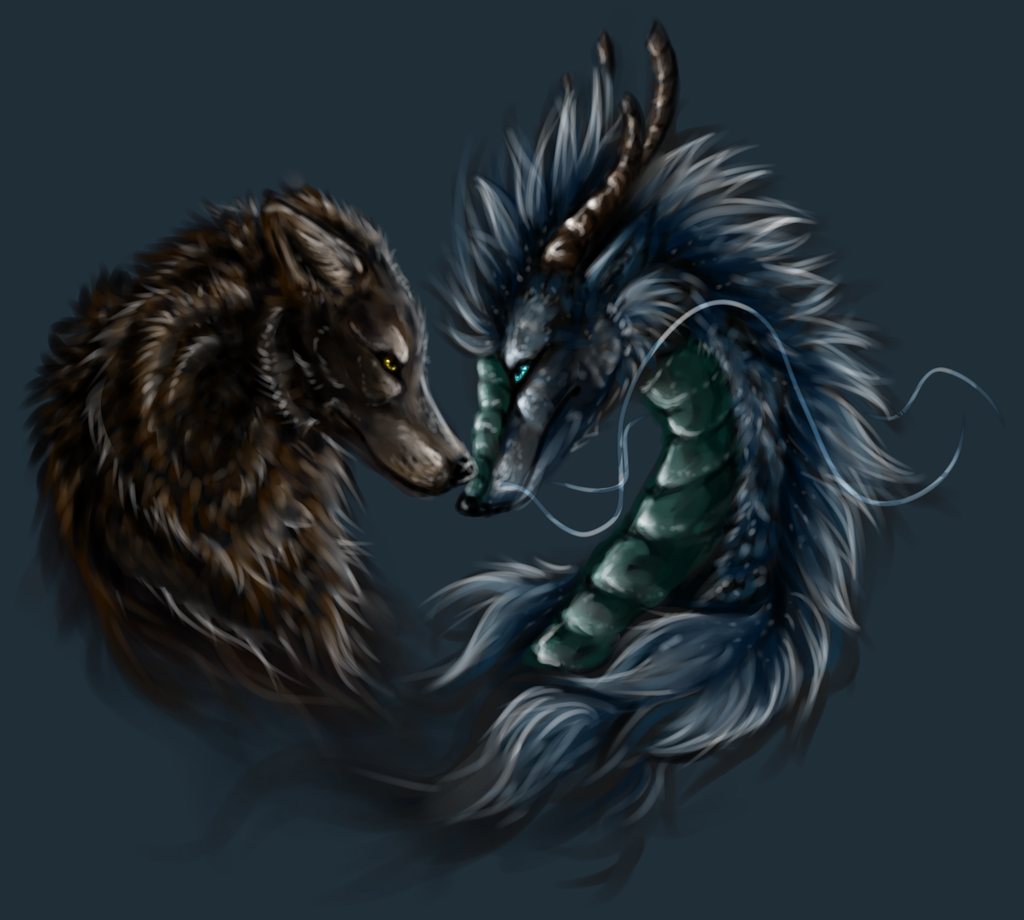
I’m a wolf with his teeth stuck in the scales of a dragon.